The Shift Nobody Wanted to Admit Was Coming
I’ve been doing code reviews for fifteen years. I’ve sat in rooms with architects who could spot a race condition in their sleep. I’ve also watched those same people struggle to keep up with pull request volume, context-switching between repositories, and the grinding fatigue of holding an entire system’s state in their head while evaluating whether someone’s refactoring is actually safe.
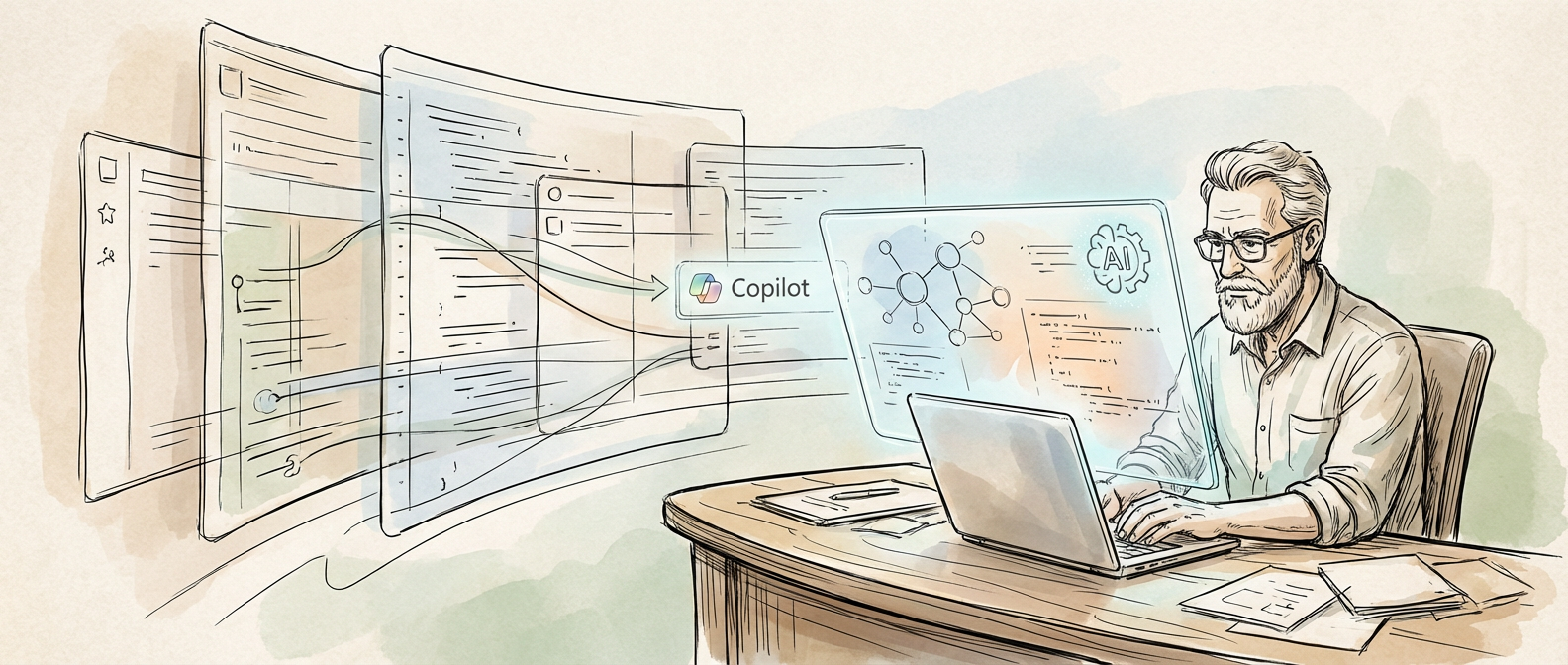
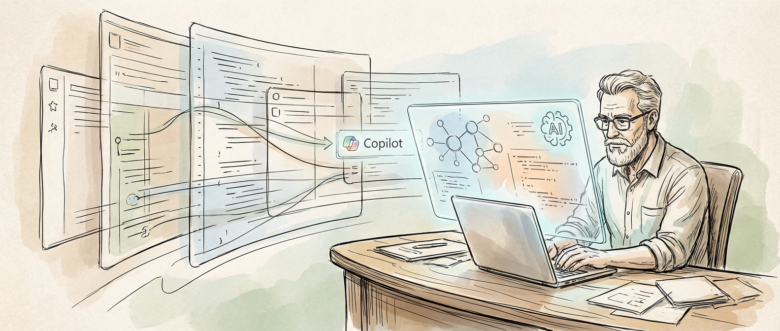
GitHub Copilot Workspace changed something fundamental about that process, and not in the way the marketing teams want you to think. It’s not about the AI writing better code. It’s about how senior engineers now think about their role when a tool can understand context across ten files, flag inconsistencies that span modules, and propose specific fixes in seconds. That shift is real. It’s measurable. And it’s forcing us to confront what code review actually is.

The Numbers Paint a Specific Picture
The data is worth examining carefully. According to the GitHub Octoverse 2025 Report, teams using Copilot Workspace completed multi-file refactoring tasks 55% faster than those relying on standard IDE tooling alone. That’s not marginal. That’s the difference between a four-hour review and a two-and-a-half-hour review. Scale that across a team of ten engineers, and you’re talking about reclaiming real time.
Meanwhile, the Stack Overflow Developer Survey 2025 found that 72% of professional developers now use AI coding assistants daily, up from 44% in 2023. That’s not a trend line. That’s adoption at the speed of infrastructure shifts. GitHub Copilot itself has processed over one billion agentic task completions since its general availability launch in 2025. Microsoft’s January 2026 earnings call confirmed that GitHub Copilot has become a $2 billion annualized revenue generator, making it the fastest-growing developer tool in the company’s history.
But here’s where I need to be honest: speed gains don’t tell you whether something actually works. They tell you it’s being used. Those are different things.
The Uncomfortable Truth About What We’re Actually Losing
There’s a study from Carnegie Mellon’s Software Engineering Institute published in late 2025 that every senior engineer should read. They compared logic-level security flaw detection rates between AI-assisted reviews and senior human reviewers working without augmentation. The result stung. AI-assisted reviews caught 31% fewer logic-level security flaws.
Let that sink in. The tool that accelerates your review process is simultaneously missing almost a third more of the subtle, architectural problems that live at the intersection of modules. The flaws that don’t show up in unit tests. The ones that keep you awake at 3 AM when they hit production.
This isn’t a failure of AI. It’s a failure of how we’re thinking about the problem. We’ve become so focused on velocity that we’ve outsourced the very thing that makes senior engineers valuable: the ability to see the system as a whole and predict failure modes that haven’t materialized yet.
What Senior Engineers Actually Need to Rethink
The intelligent response isn’t to reject Copilot Workspace. It’s to use it for what it’s actually good at, and stop using it for what it isn’t.
Copilot Workspace is genuinely good at surface-level consistency. It catches naming violations across files. It identifies repetitive logic that should be abstracted. It understands local patterns and propagates them. Those tasks used to consume thirty percent of your review time. Now they’re automated. That’s useful.
But the moment you let it drive the narrative of what a security flaw looks like, you’ve already lost. The tool learns patterns from its training data. It has no concept of your specific threat model. It doesn’t know that your payment system has different security requirements than your internal documentation portal. It doesn’t know which code paths handle user input and which don’t.
The senior engineers who are winning in 2026 aren’t the ones using Copilot Workspace to do code review faster. They’re the ones using it to handle commodity work so they can spend cognitive energy on the parts that actually require judgment. They read the AI’s suggestions with skepticism. They spot-check the logic flaws it claims don’t exist. They ask whether a proposed refactoring creates new coupling problems downstream.
The Real Question for Your Team
If you’re leading engineers, or you are one, the question isn’t whether to adopt Copilot Workspace. The question is whether your team knows the difference between going faster and going better.
Tools like this work best when they’re treated as assistants to human judgment, not replacements for it. That requires discipline. It requires architects and senior engineers who understand their own blind spots well enough to know where to be suspicious. It requires code review standards that explicitly separate the kinds of problems humans are better at catching from the kinds that tools handle routinely.
The teams that will lead their fields aren’t the ones that adopted AI coding assistants. They’re the ones that looked at the data, understood what they were trading away, and made deliberate choices about where human expertise still matters most. That’s not a story that fits into a product announcement. But it’s the difference between a tool that makes you faster and a tool that makes you dangerous.